

No. MTD for Income Tax applies when you work as a sole trader, meet the relevant qualifying income threshold and aren't exempt. If you have not yet been required to use MTD and your qualifying income is below the relevant threshold, you can continue with ordinary Self Assessment or join voluntarily. If you already have to use MTD, a fall in income does not automatically remove the requirement; check HMRC’s opt-out rules.
Making Tax Digital for Freelancers

HMRC-recognised
Built for freelancers
14-day free trial
No card details needed
Freelance income can change from month to month, especially when you're juggling different clients. Coconut's MTD software for freelancers helps you track payments, organise expenses and meet your Making Tax Digital obligations without the complexity of traditional accounting software.
Keep digital records in one place, see your estimated tax bill and send updates to HMRC.


Making Tax Digital for freelancers: the essentials
Making Tax Digital (MTD) for Income Tax changes how many freelancers record income and report it to HMRC. If you're a sole trader above the relevant income threshold, you'll need compatible software to keep digital records, send quarterly updates and complete your annual Self Assessment tax return.
Here's the simple version:
What you need to know
What it means
When MTD applies
It began on 6 April 2026 for qualifying income over £50,000. The threshold falls to £30,000 in April 2027 and £20,000 in April 2028.
What income counts
Gross self-employment and property income before expenses, including income from different freelance businesses.
What you'll need to do
Keep digital records, submit quarterly updates and complete an annual Income Tax return using compatible software.
How Coconut helps
Track client payments, organise expenses, estimate tax and send MTD updates to HMRC in one place.
Why freelancers choose Coconut for Making Tax Digital
Whether you're a designer, writer or consultant, Coconut keeps your finances organised as projects come and go, so Making Tax Digital doesn't become another job on your list.

Track payments from different clients
Connect your bank accounts securely and Coconut automatically imports your transactions. See payments from different clients without searching bank statements or updating spreadsheets.

Keep on top of changing income
One month might be busy and the next much quieter. An up-to-date view of income, expenses and cash flow helps you plan ahead.
Sort expenses as you go
Coconut helps categorise business costs such as software subscriptions, equipment and work-related travel. See which expenses may be claimable without relying on memory at year-end.

Send invoices and store receipts
Create professional invoices, track payments and snap receipts with your phone. Attach receipts to transactions so they're easy to find.

Know what you might owe in tax
See an estimate of your Income Tax and National Insurance as your figures change. Know what to set aside even when your earnings vary.

Submit MTD updates to HMRC
When your quarterly updates are due, use Coconut's HMRC-recognised software to send them directly. Your updates use the figures you've already recorded.

Get support from people who understand tax
Our UK-based tax experts, including people with experience working at HMRC, are here when you need help.
Who needs to use MTD software for freelancing?
MTD for Income Tax applies to freelancers operating as sole traders who are registered for Self Assessment, meet the relevant qualifying income threshold and aren't exempt. The rollout depends on income reported in earlier Self Assessment returns:
When MTD starts
Qualifying income
Tax year used to assess it
6 April 2026
Over £50,000
2024/25
6 April 2027
Over £30,000
2025/26
6 April 2028
Over £20,000
2026/27
Qualifying income means gross income before expenses, not profit. For example, if you earned £52,000 from freelance projects and spent £12,000 on business costs, your qualifying income would still be £52,000.
Rental income also counts, but PAYE wages, dividends and pension income don't. If you work through a limited company rather than as a sole trader, the company's earnings aren't subject to MTD for Income Tax, although you may have other tax obligations.
Check your position using HMRC's qualifying income guidance.
How does MTD work if you have multiple clients or irregular income?
Having lots of clients doesn't mean lots of MTD returns. If you're a freelance designer working for six clients through one sole trader business, those payments form part of that business's income records. Your total gross income counts, even when payments arrive irregularly.
If you run two genuinely separate self-employed businesses, you generally need separate digital records and quarterly updates for each. Both count towards the threshold, and Coconut can manage multiple income streams in one account.
A quiet month doesn't change when MTD applies: eligibility is based on an earlier Self Assessment tax return. Keeping your figures up to date also makes cash flow easier to understand when client payments are unpredictable.
How Coconut works
Getting ready for MTD for freelancers in the UK doesn't have to be complicated.

1. Sign up
Create your Coconut account and start a free 14-day trial. No card details needed.

2. Connect your bank
Securely link your accounts through Open Banking so transactions can be imported automatically.

3. Organise your finances
Categorise freelance income and expenses, send invoices and attach receipts to keep your records tidy.

4. Send updates to HMRC
Once you've authorised Coconut with HMRC, submit quarterly updates and your annual MTD tax return through the app when required.
Keep your freelance income and expenses organised in one place
Digital record keeping means recording the amount, date and category of each relevant business income or expense using compatible software. You still retain supporting documents, but don't need to rebuild records from paper receipts and bank statements.
What you're managing
How Coconut helps
Client income
Track payments from different clients and see what's been received.
Invoices
Create invoices and follow up on outstanding payments.
Business expenses
Categorise costs and keep receipts linked to transactions.
More than one business
Manage multiple income streams while keeping the required records organised.
Tax and cash flow
See your estimated tax position and understand what's coming in and going out.
If you're a sole trader who wants broader bookkeeping guidance, see our accounting software for sole traders and self-employed people.
Quarterly MTD updates made simpler
Under MTD for Income Tax, you need to submit quarterly updates summarising your recorded business income and expenses. These aren't four separate tax returns, and you don't have to pay Income Tax every quarter. You still submit an annual Self Assessment tax return and pay as usual.
For the standard tax-year reporting periods, the deadlines are:
Quarterly update
Period covered
Deadline
First
6 April – 5 July
7 August
Second
6 April – 5 October
7 November
Third
6 April – 5 January
7 February
Fourth
6 April – 5 April
7 May
Each update includes cumulative totals from the start of the tax year. Calendar update periods are also available for eligible accounting periods; the filing deadlines remain the same.
Coconut uses your digital records to prepare quarterly updates, so you're not starting from scratch. For a closer look, see our guide to filing an MTD quarterly update.
What happens at the end of the tax year?
You'll still submit one annual Self Assessment tax return through your MTD-compatible software. Check your figures, make accounting adjustments, claim reliefs and add any other income.
You may see this described as a final declaration or year-end submission, but HMRC now refers to it as your tax return. The deadline remains 31 January following the tax year, when you'll also usually need to pay any outstanding tax.
Coconut's MTD filing plan helps you complete the year-end return as well as your quarterly updates.
Can freelancers get Coconut free?
Yes. Try Coconut free for 14 days with no card details needed.
There are also partner offers. Eligible customers new to both Coconut and Revolut Pro can get two years of Coconut free by opening a Revolut Pro account. Existing Revolut Pro customers may qualify for one year free through Pro Perks. Eligible new Zempler customers can also get two years free when they open and connect an account through Coconut. Terms apply.
Explore Coconut's free MTD offers
 No card details required
- FCA authorised
- Bank level security
Choosing the best MTD software for freelancers

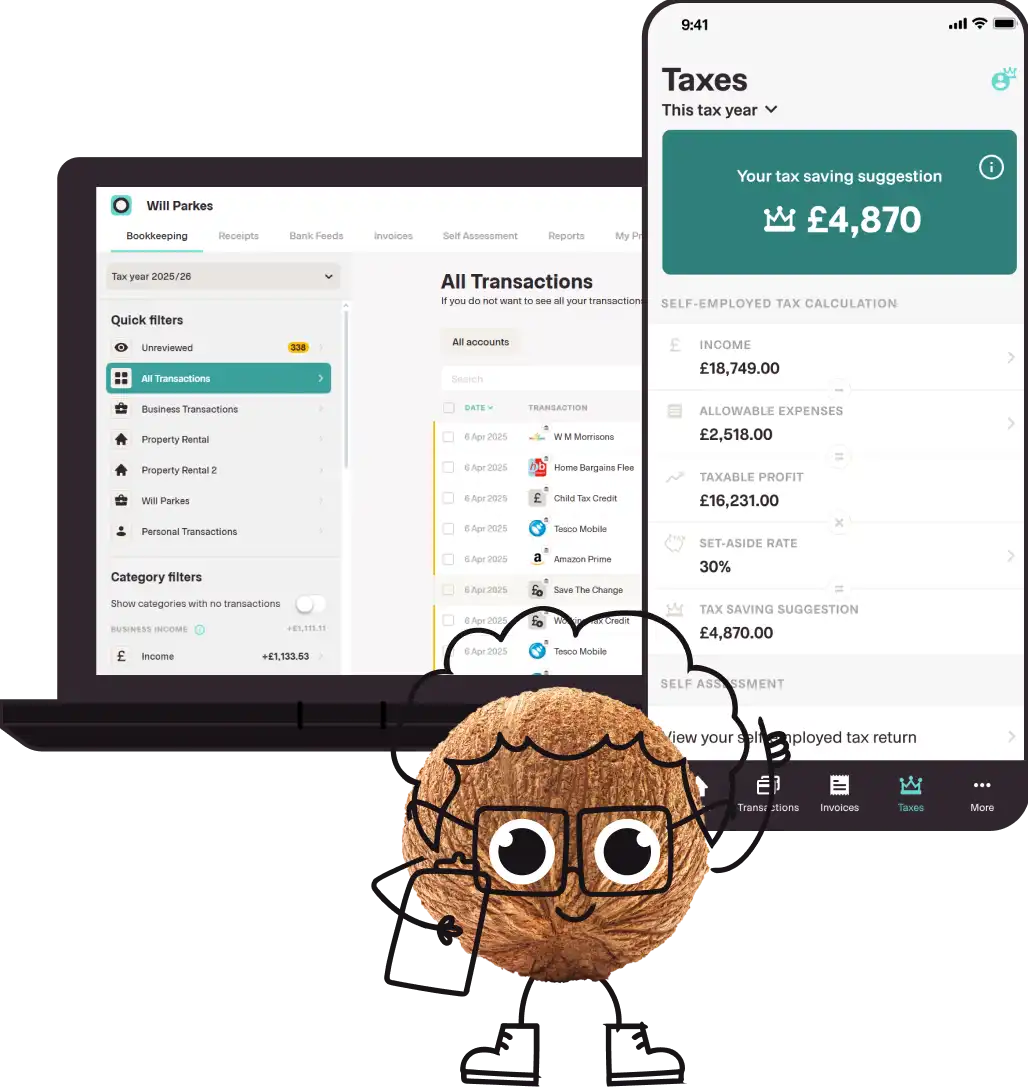
The best MTD software for freelancers should do more than make quarterly submissions possible. Look for HMRC-compatible software that fits the way you work, particularly if you're managing changing client payments, invoices and expenses.
Creative freelancers such as designers and photographers benefit from tracking project income, receipts and cash flow.
If you already manage your records in spreadsheets, bridging software can be a practical option for sending MTD submissions. If you'd rather have connected bank feeds, digital records, tax estimates and filing together, Coconut's full MTD software brings them into one place.

Simple pricing for freelancers
Choose the support you need as a sole trader:
MTD Bridging
£49.99
per year
Monthly pricing not available
Best for sole traders & landlords using spreadsheets to submit MTD updates
£16.99
per month
Key features
- Keep your spreadsheet and stay MTD compliant
- Submit MTD quarterly updates directly to HMRC
- Supports self-employment and property income
- Multiple businesses and income sources
- Download our ready-made MTD spreadsheet template
- One click upload of the completed spreadsheet
Bookkeeping
£99.99
per year
Monthly pricing not available
Best for sole traders & landlords who file Self Assessment tax returns
£16.99
per month
Key features
- Automatic income and expense tracking
- Connect your bank in 30 seconds
- Expenses categorised for you
- Friendly UK expert support
- Self-employment prep (SA103)
- Property income prep (SA105)
- Snap and store receipts instantly
- Clear guidance on claimable expenses
Most popular
MTD filing
£12.99
per month
Or £129.99 per year
Best for sole traders & landlords who need HMRC-recognised MTD software for Income Tax
£21.99
per month
Key Features
- Send quarterly MTD updates to HMRC
- Includes your MTD Annual Submission (Year-End Declaration)
- Dedicated MTD expert help
- In year tax estimates
- Automatic income and expense tracking
- Connect your bank in 30 seconds
- Expenses categorised for you
- HMRC recognised for MTD
Want Coconut for free for 2 years?
Then apply for a Zempler bank account within Coconut. It only takes 2 minutes!
Coconut also offers MTD bridging from £49.99 a year for freelancers who want to keep using spreadsheets. Check current plans and monthly pricing to choose what works for you.

HMRC-recognised software for MTD for Income Tax
Coconut is HMRC-recognised software for Making Tax Digital for Income Tax. It helps freelancers keep digital records and send quarterly updates and their annual tax return securely, without needing a complex accounting system.
You can check compatible software on HMRC's official list.


FAQs
You still record income and expenses as they arise and send quarterly updates when required. Quiet months don't remove your MTD obligations. Coconut shows changing cash flow and tax estimates.
Not necessarily. As a sole trader, you can use MTD-compatible software yourself or work with an accountant. Coconut lets you share up-to-date records with your accountant.
Yes. Coconut can help track freelance income alongside other income sources. PAYE wages don't count towards MTD qualifying income, but you still report them in your annual Self Assessment return.
Look for software suited to juggling clients and projects. Coconut's MTD software for creative freelancers combines income tracking, invoicing, receipt capture, tax estimates and HMRC submissions in one place.

Get ready for Making Tax Digital with Coconut
Freelancing comes with enough moving parts. Your tax software shouldn't add to them.
With Coconut, you can:
Track income from different clients and projects.
Keep business expenses and receipts organised.
See what you may owe in Income Tax.
Send quarterly updates and your annual MTD tax return to HMRC.
Start your free 14-day trial and get your freelance finances organised with Coconut.
- No card details required
- FCA authorised
- Bank-level security


