




Making Tax Digital is often associated with VAT - but the rules governing VAT and Income Tax are separate. That means you may need to follow Making Tax Digital for Income Tax even if you have never been VAT registered.
Equally, you could be VAT-registered but below the compulsory VAT registration threshold. In that case, the VAT rules may already apply to you, while your Income Tax position depends on a separate set of income thresholds.
The main takeaway for businesses: your VAT status does not decide whether Making Tax Digital for Income Tax applies.
Here’s how the two systems differ, which rules may affect you and what you can do now to get ready.
Is Making Tax Digital Only for VAT-Registered Businesses?
No. Making Tax Digital is not only for VAT-registered businesses.
There are separate Making Tax Digital systems for different taxes.
The two most relevant to sole traders and landlords are:
● Making Tax Digital for VAT
● Making Tax Digital for Income Tax
MTD for VAT applies because a business is registered for VAT.
MTD for Income Tax applies based on a sole trader’s or landlord’s qualifying income. You can therefore fall within the Income Tax rules without being registered for VAT at all.
You may be:
● in MTD for VAT but not MTD for Income Tax
● in MTD for Income Tax but not MTD for VAT
● required to follow both sets of rules
● outside both systems for now
Understanding which category applies to you starts with separating the two regimes.
What Is Making Tax Digital for VAT?
Making Tax Digital for VAT applies to VAT-registered businesses.
Under MTD for VAT, businesses need to:
● keep certain VAT records digitally to meet the digital record keeping requirements
● maintain the required digital links between software products
● submit VAT returns using compatible software
The rules apply to businesses that were required to register because their taxable turnover exceeded the VAT registration threshold.
They also apply to businesses that chose to register voluntarily while their turnover was below that threshold.
So, once you are VAT registered, being below the registration threshold does not remove your MTD for VAT responsibilities.
You continue to keep the relevant VAT records and must use compatible software to file VAT returns through HMRC systems for as long as you remain VAT registered, unless an exemption applies.
What Is Making Tax Digital for Income Tax?
Making Tax Digital for Income Tax applies to some sole traders and landlords who report through Income Tax Self Assessment.
It changes how you keep records and send information to HMRC.
Instead of only bringing your business figures together at the end of the year, you will:
- keep digital records of your self-employment or property income and expenses
- send quarterly updates to HMRC using MTD-compatible software
- complete your year-end tax return through compatible software
The rules began on 6 April 2026 for people whose qualifying income was over £50,000 in the 2024/25 tax year.
They are being introduced in stages:
● from April 2026: based on qualifying income over £50,000 inthe 2024/25 tax year
● from April 2027: based on qualifying income over £30,000 inthe 2025/26 tax year
● from April 2028: based on qualifying income over £20,000 in the 2026/27 tax year
These thresholds have nothing to do with VAT registration.
A sole trader who is not VAT registered may still need to use MTD for Income Tax if their qualifying income for the relevant tax year is above the applicable threshold.
What Is Qualifying Income?
Qualifying income is your total gross income from:
● self-employment
● UK property
Gross income means the amount you receive before business or property expenses are deducted.
For example, suppose you receive:
● £38,000 from self-employment
● £15,000 in gross rental income
Your total qualifying income would be £53,000.
If that £53,000 was your qualifying income for the 2024/25 tax year, it would put you above the threshold for joining MTD for Income Tax from April 2026, even if your profit was much lower after expenses.
Your qualifying income does not usually include:
● employment income taxed through PAYE
● dividends
● pension income
● your share of partnership profits
However, some of that income may still need to be included when you complete your year-end Self Assessment tax return through MTD software.
When Does MTD Apply to a Non-VAT Registered Business?
You may need to follow Making Tax Digital for Income Tax if:
● you are a sole trader or landlord
● you report income through Income Tax Self Assessment
● your qualifying income was above the relevant threshold inthe tax year HMRC uses to determine when you must join
You do not need to be VAT registered.
For example, a sole trader whose gross self-employment income was £55,000 in the 2024/25 tax year may need to use MTD for Income Tax from April 2026, even if they are below the VAT registration threshold and have never registered for VAT.
The same applies to a landlord whose qualifying property income for the relevant tax year takes them over the applicable threshold.
If you have both self-employment income and property income, HMRC looks at the combined amount.
This means neither income source needs to cross the threshold on its own.
What If You Are VAT Registered but Under the VAT Threshold?
A business can be VAT registered even when its taxable turnover is below the compulsory VAT registration threshold.
This is known as voluntary registration.
Businesses may register voluntarily for different reasons, such as reclaiming VAT on eligible costs or because VAT registration suits the way they work with customers.
Once registered, the business generally needs to follow MTD for VAT, even though its turnover is below the registration threshold.
Whether MTD for Income Tax also applies is a separate question.
For example, a voluntarily VAT-registered sole trader with £25,000 of qualifying income in the relevant tax year may:
● need to follow MTD for VAT
● remain outside mandatory MTD for Income Tax for now
A VAT-registered sole trader with £60,000 of qualifying income in the relevant tax year may need to follow both systems.
The VAT threshold and the MTD for Income Tax threshold measure different things and create different obligations.
Can Both Sets of Making Tax Digital Rules Apply at Once?
Yes.
A VAT-registered sole trader or landlord may need tofollow both MTD for VAT and MTD for Income Tax.
The two systems remain separate.
You will still need to:
● maintain the required VAT records
● submit VAT returns according to your VAT schedule
● keep digital Income Tax records
● send quarterly Income Tax updates
● complete your year-end MTD tax return
Some software products can support both sets of requirements. Coconut only supports MTD for Income Tax and is designed for non-VAT-registered businesses.
However, filing a VAT return does not count as an Income Tax quarterly update. Similarly, an Income Tax update does not meet your VAT filing responsibilities.
Both need to be completed according to their own rules and deadlines.
Which MTD Rules Apply to You?
The easiest way to understand your position is to look separately at your VAT status and your qualifying income for the tax year HMRC uses to determine when you must join.
You are not VAT registered and your qualifying income for the relevant tax year is over the threshold
You will not need to follow MTD for VAT.
However, you will need to use Making Tax Digital for Income Tax from the relevant start date.
That means keeping electronic records, sending quarterly submissions and completing the final declaration through compatible software.
You are VAT registered but your qualifying income for the relevant tax year is below the Income Tax threshold
You will continue to use MTD for VAT.
You will not need to join MTD for Income Tax yet, unless your qualifying income in a later assessment year rises above the applicable threshold.
You are VAT registered and your qualifying income for the relevant tax year is above the threshold
You may need to follow both sets of rules.
This means managing separate VAT submissions and quarterly reporting for Income Tax. You’ll need to choose software that supports the particular obligations that apply to you.
You are not VAT registered and your qualifying income for the relevant tax year is below the threshold
Some small business owners may remain outside both MTD systems for now if they are not VAT registered and their qualifying income for the relevant tax year is below the threshold.
You will generally continue completing your usual Income Tax Self Assessment return.
It is still worth checking your qualifying income each tax year, particularly as the MTD for Income Tax threshold is being reduced in stages.
Do All Self-Employed People Have to Go Digital?
No. MTD for Income Tax does not apply to every self-employed person at the same time.
Whether you need to join depends primarily on your qualifying income for the relevant tax year and whether you fall within the applicable rules.
If your qualifying income for the relevant tax year is below the applicable threshold, you may continue using the existing Self Assessment process for now.
The staged rollout means more sole traders and landlords will be included over time.
Even if the rules do not yet apply to you, starting to keep clear digital records can make the change easier later. It can also give you a better view of your income, expenses and likely tax position.
Is Being Below the Threshold the Same as an MTD Exemption?
No.
Being below the relevant income threshold for the applicable tax year usually means you are not currently required to join MTD for Income Tax.
An exemption is different. It means that the rules would otherwise apply, but HMRC agrees that it is not reasonable or practical for you to use digital tools.
You may be able to apply for an exemption because of factors such as:
● age
● a disability or health condition
● religious beliefs
● a lack of reliable internet access
● another circumstance that makes digital record keepingimpractical
HMRC considers exemption requests based on theindividual circumstances.
You should not assume that an exemption appliesautomatically. You normally need to contact HMRC and receive confirmation.
Not being VAT registered is not, by itself, a reasonfor exemption from MTD for Income Tax.
Do You Need a Business Bank Account for Making Tax Digital?
No. The MTD rules do not generally require a sole trader to open a separate business bank account.
However, using one can make digital record keeping easier.
Keeping business and personal transactions separate can help you:
● identify business income more quickly
● categorise expenses
● reduce the chance of missing transactions
● connect a cleaner bank feed to your software
● prepare quarterly updates more easily
If you continue using a personal account for business transactions, you will still need a clear process for separating personal spending from business income and expenses.
What Records Do You Need to Keep?
If MTD for Income Tax applies, you need to maintain digital records of your self-employment or property transactions.
These usually include details such as:
● the date of the transaction
● the amount
● the type or category of income or expense
You can keep these records in:
● full bookkeeping or accounting software
● a spreadsheet connected through bridging software
● a combination of digitally linked products
The right setup depends on how you already work.
If you are comfortable keeping your own spreadsheet up to date, bridging software may be a straightforward way to connect those records to HMRC.
If you want to reduce manual record keeping, fuller MTD for Income Tax software can import bank transactions, help categorise income and expenses and keep more of the process in one place.
How to Prepare Before MTD Applies
You do not need to wait until your first quarterly deadline to get ready.
A few simple steps can make the transition easier.
Check your qualifying income
Look at your gross self-employment and property income before expenses.
Add the two together, then check which rollout threshold applies to the relevant tax year. For example, qualifying income from 2024/25 is used to determine whether you need to join from April 2026.
Review how you keep records
Check whether your income and expenses are already stored digitally.
If you currently rely on paper records or catch up with your bookkeeping once a year, it may help to start updating your records more regularly.
Choose the level of software support you need
Think about whether you want to:
● keep using an existing spreadsheet
● connect a spreadsheet to HMRC with bridging software
● import bank transactions automatically
● store receipts digitally
● track expenses and tax estimates in one place
You do not need to pay for features you will not use. But software that removes regular manual work may be worthwhile if your bookkeeping is becoming time-consuming.
Get familiar with the process
Using digital records before you are mandated gives you time to settle into a routine.
By the time quarterly updates become compulsory, your income and expenses should already be organised.
How Coconut Helps Non-VAT-Registered Businesses
If you’re not VAT registered but need to prepare for MTD for Income Tax, Coconut can help you keep accurate digital records without adding unnecessary admin.
Coconut is HMRC-recognised software for MTD for Income Tax, built for non-VAT-registered sole traders, landlords and CIS subcontractors.
You can choose the setup that matches how you already work.
Keep your existing spreadsheet
If you are comfortable managing records in a spreadsheet, Coconut’s bridging option gives you a straightforward way to send your MTD for Income Tax information to HMRC.
You can keep your existing spreadsheet process and use Coconut to submit the information required under MTD for Income Tax.
Automate more of your bookkeeping
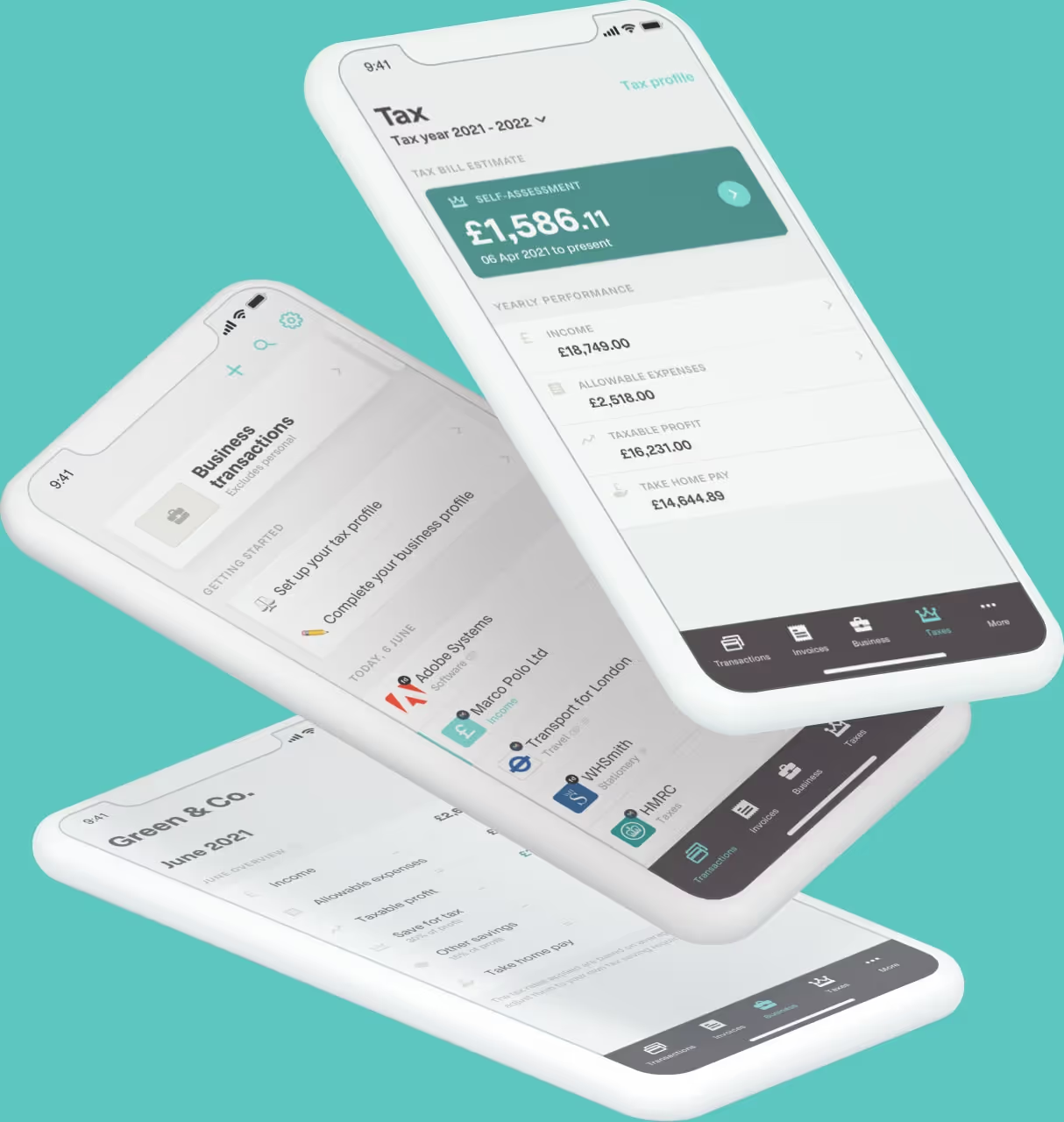
If you want more help keeping records up to date, Coconut’s fuller software can help you:
● connect your bank account
● import transactions
● categorise income and expenses
● snap and store receipts
● manage self-employment and property income
● see an estimate of what you may owe
● prepare for MTD for Income Tax quarterly updates
● complete your year-end MTD for Income Tax return
● access expert support when you need it
You can start before MTD for Income Tax becomes mandatory for you, giving yourself time to build a routine rather than changing everything close to your first deadline.
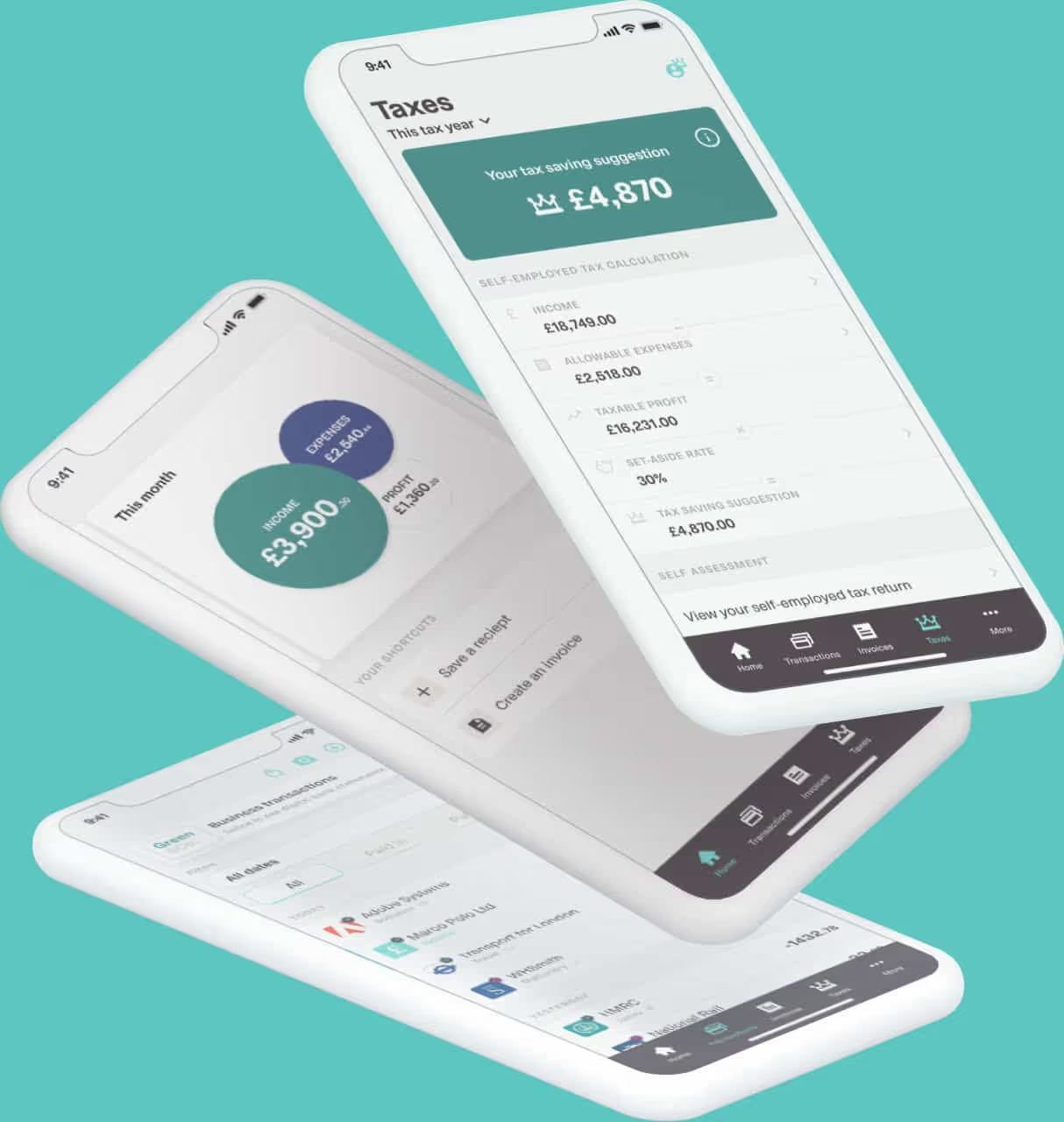
If you’re not VAT registered and need to follow MTD for Income Tax, Coconut helps you keep your income and expenses organised, prepare quarterly updates and complete your year-end submission in one place. Coconut does not support MTD for VAT, so it is not suitable if your business is VAT registered.
Explore Coconut’s MTD software and choose the setup that suits the way you work. If you’re not VAT registered, explore Coconut’s MTD for Income Tax software and choose the setup that suits the way you work.