





Many CIS subcontractors believe that because tax is deducted before they get paid, there’s nothing else to claim. But in reality, CIS deductions are only advance payments towards your tax bill. This means you can still claim a range of allowable business expenses - and in doing so, you can reduce your tax bill. Join us as we reveal more.
What is CIS tax deduction?
CIS contractors deduct tax from subcontractor payments before making payment. The standard rate in the Construction Industry Scheme is 20% for registered subcontractors and 30% for those who aren’t registered with CIS. The contractor then sends this deducted amount directly to HMRC on your behalf.
Remember, this isn’t your final tax bill. It’s tax paid in advance. As a CIS subcontractor, you still need to complete a Self Assessment tax return or a Making Tax Digital tax return, as well as report your income, claim allowable expenses and calculate your actual tax liability.
Any CIS deductions already paid are then credited against the final amount you owe.
What expenses can CIS subcontractors claim?
Wondering about CIS expenses? The good news is that many day-to-day business costs are classed as allowable expenses and can help to reduce your tax bill. This includes:
- Tools and equipment (drills, saws, measuring equipment)
- Materials (timber, cement, bricks, wiring, plumbing and paint supplies)
- Personal Protective Equipment (safety boots, hard hats, hi-vis jackets, gloves, goggles)
- Travel costs
- Phone and administrative costs (accounting software, office supplies)
- Training and certifications
The key rule
The most important thing to remember is that to be allowable, expenses must be wholly and exclusively for business purposes. So, if a cost is purely related to your subcontracting work, it’s more likely to qualify as a claimable expense.
How CIS tax deductions work with expenses
Expenses and CIS tax deductions are two separate parts of your tax calculation. First, CIS tax is deducted at source by the contractor. For example, say your invoice is £1,000. The CIS deduction, which is typically 20%, would be £200, meaning you receive £800. The £200 deducted is treated as tax you’ve already paid.
When you come to submit your Self Assessment or MTD tax return, HMRC calculates the tax due on your taxable profit. Any CIS deductions already paid are credited against the bill and you can then further reduce your tax bill by deducting allowable expenses.
In short:
- Expenses reduce your taxable profit
- CIS deductions reduce the amount of tax you still need to pay
Together, they can lower your final tax liability.
CIS tax returns - what can I claim?
When completing your tax return, you typically:
- Declare your gross CIS income
- Record all allowable business expenses
- Calculate your taxable profit
- Report CIS deductions already made by contractors
HMRC then uses this information to determine your final tax position. What’s more, if your CIS deductions exceed your actual tax bill, you might be entitled to a tax refund.
A quick example: how to calculate CIS tax deductions
Say you earn £2,000 from CIS work during a period. The contractor deducts 20% CIS tax which equals £400. You also incur £300 of allowable business expenses. This means:
- Gross income = £2,000
- Allowable expenses = £300
- Taxable profit = £1,700
The £400 CIS deduction is then treated as tax already paid and credited against the final tax bill. Ultimately, expenses reduce the taxable profit and the CIS deduction reduces the amount of tax still owed.
How to track CIS expenses easily
Getting your head around expenses and tax deductions is just the start for many subcontractors. Lost receipts, manual spreadsheets, missing expense claims and last-minute tax stress are all common struggles too.
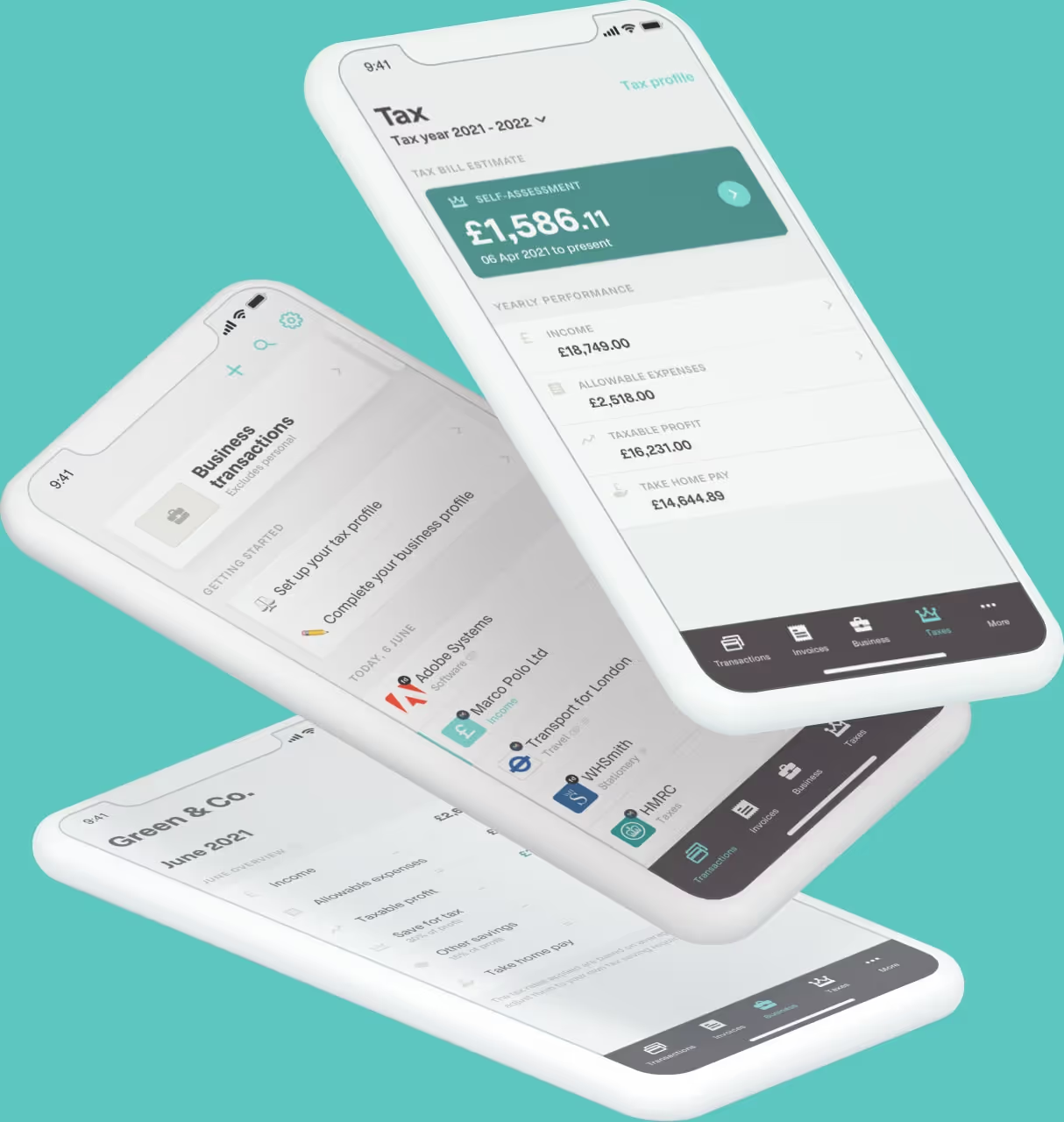
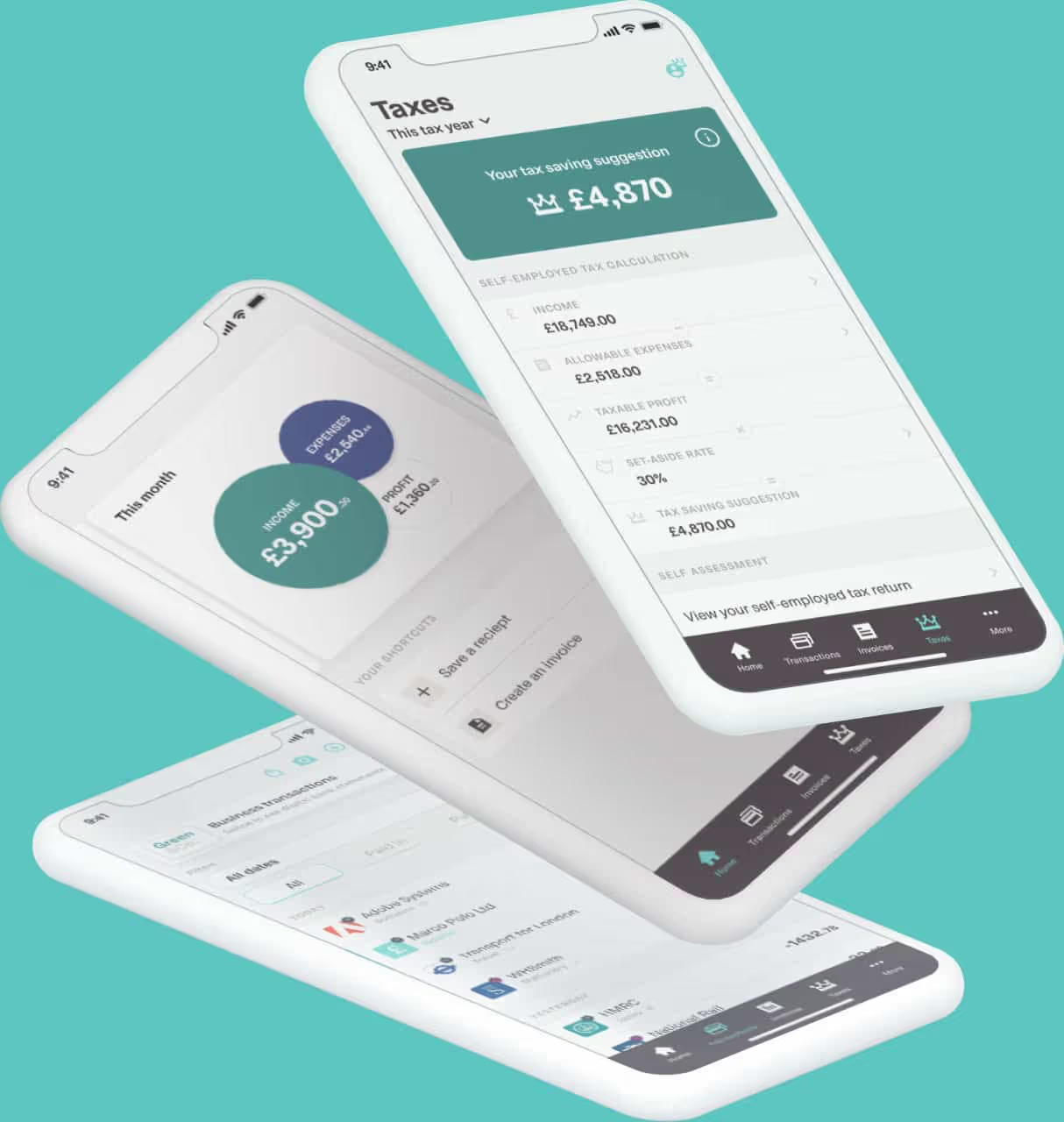
What’s more, with Making Tax Digital requirements now in force, the importance of accurate record-keeping is even more important - not to mention the need for dedicated accounting software. So, if you’re a subcontractor and are looking for a simpler way to manage your expenses, why not consider using MTD-compliant expense tracking software (Coconut)?
There are many benefits of doing so:
- Automatic expense categorisation
- CIS-friendly expense tracking
- Reduced admin workload
- Better MTD readiness
- Fewer manual errors
Frequently asked questions
What expenses can CIS subcontractors claim?
Common allowable expenses include tools, material, PPE, travel costs, phone expenses, accounting software, bookkeeping costs and training courses.
What is CIS tax deduction?
CIS tax deduction is tax withheld by a contractor before paying a subcontractor. The deducted amount is then sent directly to HMRC and counts as tax already paid.
Can I claim tools and materials?
Yes - tools, equipment, materials and consumables used for business purposes are generally classed as allowable expenses.
How do CIS deductions affect tax?
CIS deductions are credited against your final tax bill. This means it reduces the amount of tax you need to pay after your tax return has been completed.