





For self-employed plumbers, tax admin has to fit around the job. That might mean sending an invoice between call-outs, keeping hold ofa merchant receipt until you get back to the van, or catching up on bookkeeping after a full day on site.
Making Tax Digital (MTD) changes some of that. If it applies to you, you’ll need to keep digital records and send quarterly updates to HMRC using compatible software.
That can sound like another layer of admin. But with the right setup, MTD can also help simplify processes that already take too much time.
Meet Dave: a plumber with enough admin already
Dave is a self-employed plumber and heating engineer in Greater Manchester. He works as a sole trader, with turnover of around £55,000 to £70,000.
His customers include homeowners, landlords and small businesses. A normal week might involve:
● Boiler and central heating jobs
● Plumbing repairs and emergency call-outs
● Quoting, ordering materials and sending invoices
● Recording fuel, tools and other business expenses
● Occasionally paying a subcontractor
Dave does not have an accountant who deals with his annual tax return, so he needs to keep accurate records and be able to access the information he needs as quickly and easily as possible.
At the moment, those records are spread across bank statements, invoices, supplier emails, receipt photos and a spreadsheet he updates when he gets the chance.
Where your current system starts to become a problem
Dave wants to spend less time piecing together the paperwork that comes with running a plumbing business.
A few familiar problems keep cropping up:
● Admin gets pushed into the evening. Paid work comes first, so bookkeeping often waits until after a full day on the tools.
● Receipts are easy to lose. Parts and materials might come from several suppliers, and paper receipts don’t always make it into the spreadsheet.
● Records are spread across different places. Bank transactions, invoices, supplier emails and receipt photos all need to be pulled together eventually.
● It’s hard to see the full picture. What’s in the bank isn’t necessarily the same as what the business has made after expenses, or what may need to be put aside for tax.
● The accountant handover can become a big job. If records aren’t up to date, Dave has to piece everything together before his accountant can work with it.
So when Dave hears about MTD for plumbers, he mainly wants to know - what is this going to change, and will it create more admin work I don't need?
What Making Tax Digital changes for you
Making Tax Digital (MTD) for Income Tax isbeing introduced in stages for sole traders and landlords.
The thresholds are:
● From 6 April 2026: qualifying income over£50,000.
● From 6 April 2027: qualifying income over£30,000.
● From 6 April 2028: qualifying income over£20,000.
Qualifying income is based on gross self-employment and property income before expenses and tax. For a plumbing business, it’s the gross income or turnover that matters for the threshold, rather than the amount left after vehicle costs, materials, power tools, subcontractor costs or other business expenses.
If Dave also has rental income, that property incomecan count towards his qualifying income too.
With turnover of around £55,000 to £70,000, Dave is above the first threshold. Once the Making Tax Digital rules apply, he’ll need compatible accounting software to:
● Keep digital records of his self-employment income and expenses
● Maintain those records throughout the tax year
● Submit quarterly updates to HMRC
● Complete and submit his year-end tax return through his MTD software
That changes the traditional annual Self Assessment routine, but quarterly updates aren’t four extra tax returns. They summarise the digital records already being kept during the year.
After the tax year ends, Dave still completes his Self Assessment through compatible software. This MTD for Income Tax year-end stage is sometimes called the final declaration. Coconut may also refer to an MTD final declaration, while HMRC’s current guidance describes preparing and submitting the tax return through compatible software.
What records does a plumbing business need to keep?
For Dave, digital record keeping means having a proper digital record of his plumbing income and expenses.
That can include:
● Income from boiler repairs, installations and call-outs
● Payments for bathroom, heating and general plumbing jobs
● Parts and materials bought from merchants
● Fuel and eligible vehicle costs
● Tools and equipment
● Insurance and other running costs
● Subcontractor payments
● Invoices issued and payments received
● CIS deductions if he sometimes works under the Construction Industry Scheme
He’ll still need supporting documents such as invoices and receipts where required. The challenge is keeping those records organised while the work is happening.
What will MTD add to your workload?
Dave doesn’t want to build his working life around complicated accounting software.
He wants to avoid:
● Manually entering every transaction.
● Working through statements to identify payments and costs.
● Chasing paperwork every three months for quarterly updates.
● Using cloud accounting software designed around much larger businesses.
● Paying for features he’ll never use.
● Duplicating work between himself and his accountant.
What he needs is accounting software that meets the MTD requirements while fitting around the way he already works.
That’s where Coconut’s MTD accounting software comes in.
How Coconut fits around your plumbing business
Coconut is built for sole traders and other self-employed people. For Dave, the value is making the record keeping behind MTD easier to manage day to day.
Receipts can be dealt with while they’re still to hand
Dave buys parts and materials throughout the week, often from several suppliers. Waiting until month-end means relying on every paper receipt making it back safely.
With Coconut, he can scan receipts using his phone, store them digitally and attach them to the relevant transactions. That keeps business expenses together and gives his accountant cleaner information at year-end.
Bank feeds cut down on manual data entry
If Dave uses a bank account with one of the 30+ banks Coconut connects to, he can securely connect his personal and/or business account to Coconut through Open Banking. Bank feeds then bring transactions into the software automatically.
Instead of copying figures from statements into a spreadsheet, Dave can review and categorise his income and expenses. Customer payments can be recorded as plumbing income, while merchant purchases, vehicle costs and subcontractor payments sit alongside the rest of his business records.
That means the digital records needed for Making Tax Digital can build up as part of his normal bookkeeping, rather than being recreated later.
Invoices and cash flow are easier to keep on top of
Coconut also lets Dave create and send invoices and keep track of whether they’ve been paid.
Plumbing income can vary from month to month. One week might include a large boiler installation, while another is made up of smaller repairs and call-outs.
Keeping invoices, payments and expenses together gives Dave a clearer view of what’s outstanding and can make cash flow management easier.
Tax estimates give you more visibility
A healthy bank balance doesn’t necessarily tell Dave how much money is really available to spend once Income Tax and National Insurance are taken into account.
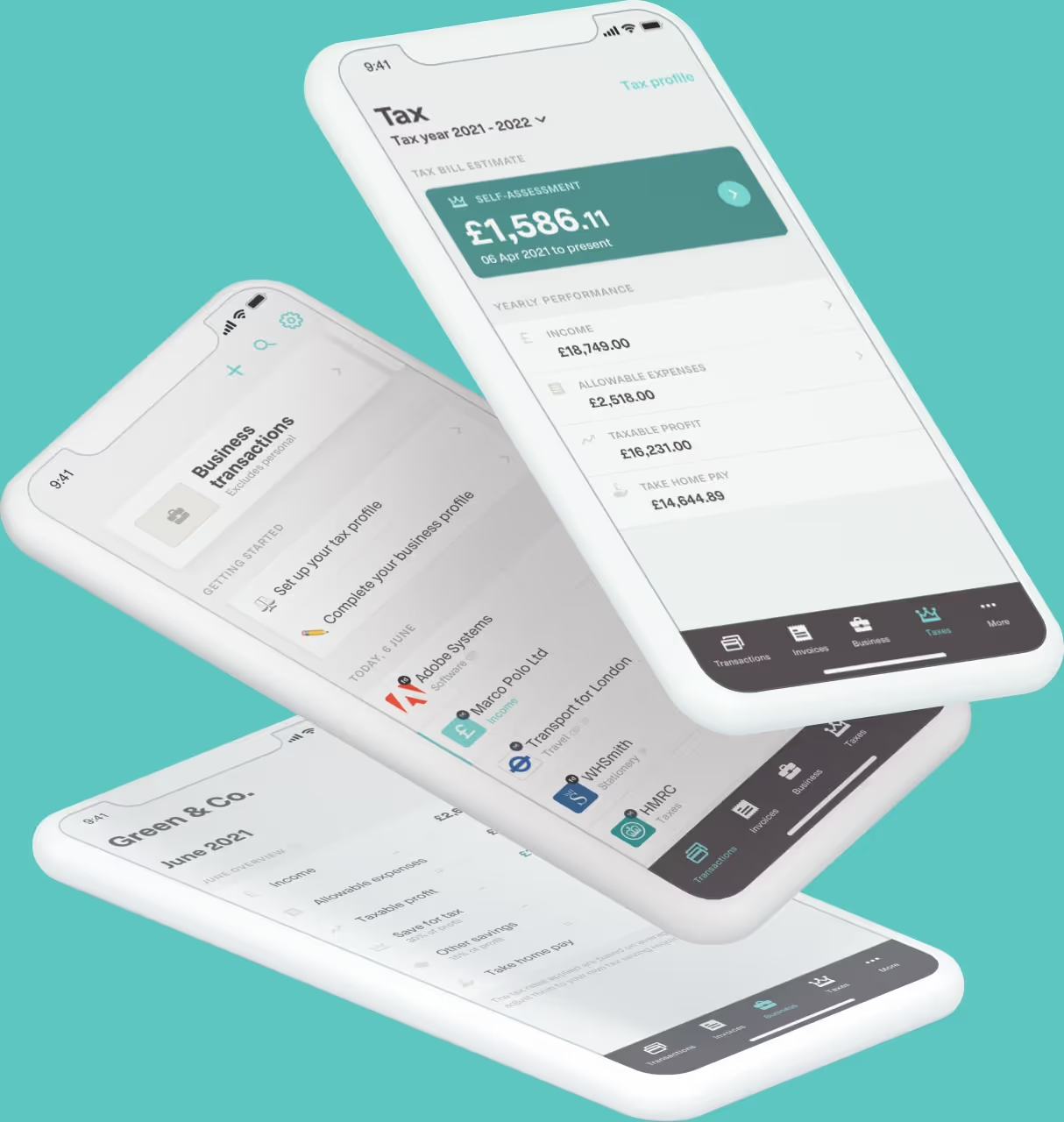
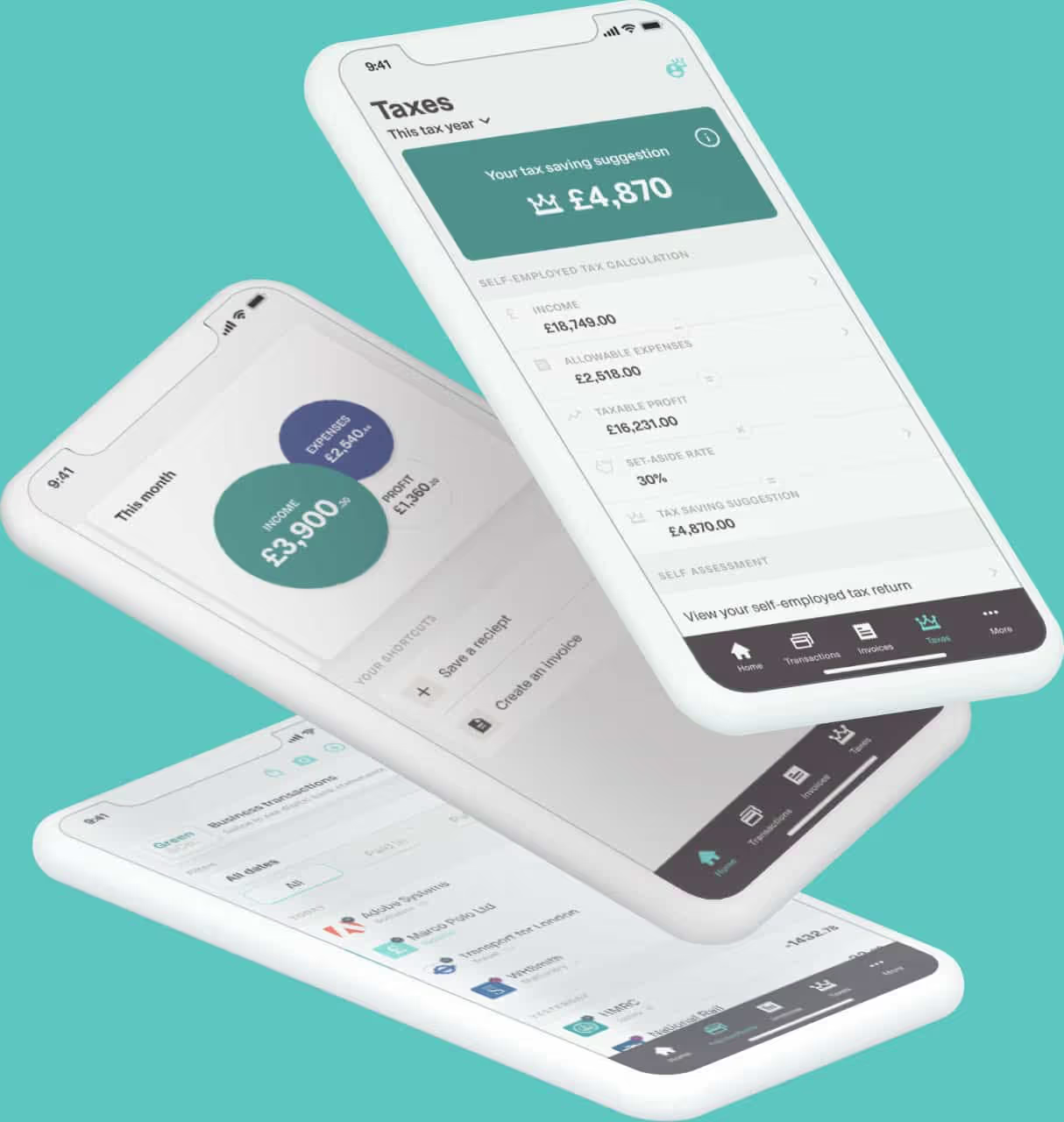
Coconut for sole traders provides in-year tax estimates based on the records held in the software. As Dave logs income and expenses, he can get a clearer picture of how much tax he may need to put aside.
That doesn’t replace personalised advice, but it can make tax planning less dependent on waiting until year-end.
Quarterly updates become easier when the records are alreadythere
Under MTD for Income Tax, Dave needs to submitquarterly updates through compatible accounting software.
For standard update periods, the deadlines are:
● 7 August.
● 7 November.
● 7 February.
● 7 May following the end of the tax year.
Each quarterly update is cumulative, covering digital records from the start of the tax year to the end of that update period. HMRC doesn’t require accounting or tax adjustments before a quarterly update is sent.
If Dave has been using Coconut to log income, categorise transactions, store receipts and keep invoices up to date, the records needed for his MTD quarterly updates are already being built as he works.
Rather than starting with three months of statements and receipts, he can review the figures already in the software and submit the update from there. Coconut also provides a step-by-step guide to submitting an MTD quarterly update.
You can still work with your accountant
Using Making Tax Digital accounting software doesn’t mean Dave has to stop working with his accountant.
For Self Assessment and the final declaration, Dave can share his Coconut records with his accountant,so the information they need is already organised.
In practice, that means:
● Dave keeps the day-to-day digital records up to date.
● Coconut keeps income, expenses, receipts and invoices together.
● His accountant can work from those records instead of receiving a last-minute bundle of spreadsheets and documents.
● The accountant can still support Dave with Self Assessment, tax planning and his year-end position.
Making Tax Digital can simply mean giving the accountant better records to work with.
What if you also work under CIS?
Some plumbers and heating engineers also work under the Construction Industry Scheme.
Making Tax Digital doesn’t replace CIS. If Dave works as a CIS subcontractor, contractors may still make CIS deductions from his payments. He’ll need records showing his gross income and the deductions already made.
Coconut can keep that information alongside his wider plumbing income and expenses. See MTD software for CIS subcontractors for more on how this works.
Do you need a complicated accounting system to comply with MTD?
No. You need MTD-compatible accounting software that can maintain digital records and send MTD submissions to HMRC, but that doesn’t mean choosing the most complex system available.
If sole traders already have an existing spreadsheet system that works well, bridging software can connect those spreadsheet records to HMRC. Coconut offers MTD bridging software for people who prefer that approach.
For Dave, the spreadsheet is already difficult to keep up to date. A broader digital solution makes more sense because it tackles record keeping as well as quarterly updates.
What changes for you once Coconut is doing more of the admin?
MTD still creates new responsibilities for Dave. He needs to keep digital records, stay on top of quarterly updates and submit his year-end tax return through compatible software. But his business admin no longer has to work the way it did before.
With Coconut in place:
● Receipts are stored when Dave gets them, rather than collected for later.
● Bank transactions feed into the records automatically, reducing manual entry.
● Income and expenses stay organised during the taxyear, instead of being reconstructed at the end.
● Invoices and payments are easier to track, giving him a better view of cash flow.
● Tax estimates give him more visibility, helping with tax planning.
● Quarterly updates use records that already exist, instead of triggering a fresh paperwork exercise every three months.
● His accountant gets cleaner information, reducing the year-end scramble.
That's where Coconut can make the difference.
It doesn’t change the fact that Dave has tax obligations to meet. It gives him a simpler way to fit them around the plumbing business he is actually trying to run.
Making MTD fit around the way you actually work
MTD for plumbers is a change, especially if you’ve always managed tax through a mixture of spreadsheets, paper receipts and one big annual handover to your accountant.
But it doesn’t have to mean adding a complicated accounting process to an already busy week.
Coconut brings income and expenses, bank feeds, receipts, invoicing, tax estimates and MTD submissions into one place. For Dave, that means less paperwork, a clearer view of the business and records that are ready when HMRC or his accountant needs them.
Start your 14-day free trial of Coconut and see how it can make MTD easier to fit around your business.